Within the SIRENA project, the UNESCO Chair on Sustainability and the InLab research group at the Universitat Politècnica de Catalunya (UPC) are advancing more sustainable and informed water management through the development of innovative artificial intelligence (AI) tools.
UPC leads the development of the AI WEFE Nexus scenario-modelling tool and co-leads, alongside CogniSensus, the participatory Nature-based Solutions (NbS) selection widget. These tools aim to support decision-makers in identifying, evaluating and adapting water management solutions to different environmental, economic and social contexts across the Mediterranean.
Using AI to support sustainable water management
Building on the WEFE Nexus AI tool developed under the PRIMA-funded SURENEXUS project, UPC will enhance and adapt its capabilities to support SIRENA’s objectives. The tool will help explore different scenarios and assess the potential impacts of NbS and circular economy approaches across four interconnected dimensions: Water, Energy, Food and Ecosystems (WEFE).
By comparing different combinations of solutions and making potential trade-offs more visible, the tool aims to provide valuable insights for more integrated and evidence-based water planning. However, a central principle guides its development: artificial intelligence supports decision-making but does not replace human expertise.
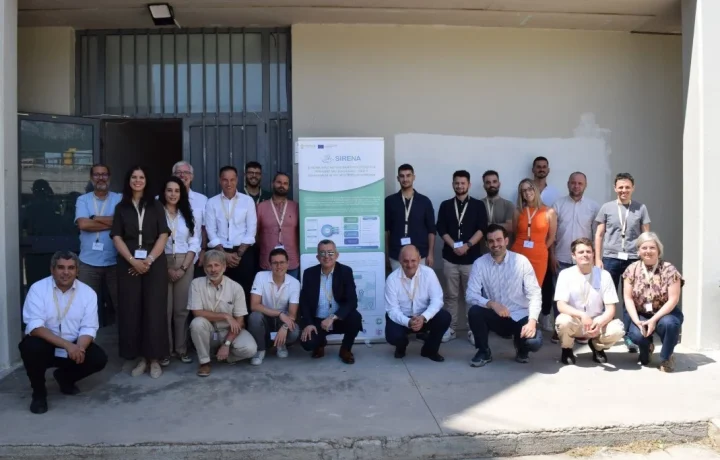
As highlighted by Dr. Jordi Morató, Director of the UNESCO Chair on Sustainability, during SIRENA’s Kick-Off Meeting in Athens, the approach prioritises human supervision, ensuring that final decisions remain in the hands of experts and stakeholders involved in the co-design process.
Connecting digital innovation with local needs
Beyond scenario modelling, UPC and CogniSensus are also collaborating on the participatory NbS selection widget, designed to support the identification of suitable solutions while considering local priorities and conditions.
Another important aspect of UPC’s contribution is the integration of technical, economic, social, cultural and policy indicators into the project’s digital monitoring framework. This approach aims to ensure that the tools developed within SIRENA can support consistent assessments across the WaterMED Labs while remaining responsive to the specific challenges of each territory.
Next steps: Linking AI, policy and monitoring
As part of its upcoming activities, UPC will also explore an AI-assisted methodology for compiling and structuring water-related policies across the countries involved in SIRENA, contributing to comparative analysis within the capacity-building and policy-alignment activities led by SEMIDE.
Together, these efforts will contribute to SIRENA’s broader ambition of developing integrated, participatory and digitally supported approaches to Mediterranean water resilience, combining technological innovation with local knowledge and human-centred decision-making.